
The Story Behind Mpatamanga
A Conservation Story
Ian Bartlett
8/4/20264 min read

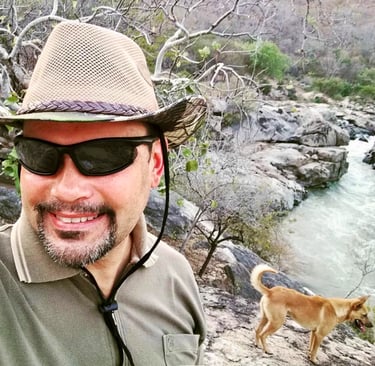
Why I Dedicated Twenty Years to a Forgotten Wilderness
Some stories choose their authors.
When I first stood overlooking the dramatic cliffs of Mpatamanga Gorge in southern Malawi, I had no idea that the landscape before me would shape the next twenty years of my life. I certainly never imagined that one day I would write a book about it.
Yet here I am, introducing MPATAMANGA—the true story of a conservation journey that became one of the most rewarding and challenging chapters of my life.
Many readers know me through my first book, Memoirs of a Real Crocodile Hunter, where I shared my experiences as a licensed crocodile hunter protecting villages from dangerous crocodiles in Malawi. That story was about responding to immediate danger, often in the dead of night, where every decision could mean the difference between life and death.
MPATAMANGA is different.
This is not the story of a hunter.
It is the story of a conservationist.
It is about what happened when I exchanged rivers filled with crocodiles for rugged hills, ancient woodland and one of Malawi’s most spectacular wilderness areas. It is about the decision to dedicate more than two decades to protecting a place that many people had never even heard of.
That place became Mpatamanga Wildlife Ranch.
A Dream That Started With a Vision
When I first acquired the land, it wasn’t because I expected fame or recognition. There was no business plan promising financial rewards and certainly no expectation that anyone would one day write articles about my work.
I simply believed the land deserved to be protected.
Nestled alongside the Shire River, Mpatamanga is an extraordinary landscape of steep escarpments, indigenous woodland and dramatic scenery unlike anywhere else in Malawi. It possesses a quiet beauty that photographs never quite capture. You have to stand there, breathe the air and watch the light change across the gorge to truly appreciate its magic.
I saw a place worth preserving.
Unfortunately, not everyone shared that vision.
For many people, woodland represented timber to be cut, charcoal to be produced or land waiting to be cleared. I understood those economic pressures, but I also knew that once mature indigenous woodland disappears, it can take generations to recover—if it recovers at all.
That belief became my motivation.
Conservation Isn’t Glamorous
People often imagine conservation as an endless sequence of beautiful wildlife encounters and spectacular sunsets.
Those moments certainly exist, but they represent only a small part of the reality.
Real conservation is often exhausting.
It means spending weekends patrolling woodland instead of relaxing.
It means constantly watching for illegal logging, monitoring fires during the dry season and ensuring that years of regeneration are not destroyed in a single afternoon.
Sometimes it means confronting poachers.
Sometimes it means chasing thieves.
Sometimes it simply means refusing to give up when progress feels painfully slow.
The truth is that conservation is rarely glamorous.
It is built upon consistency.
One patrol.
One firebreak.
One tree.
One season at a time.
Those small actions eventually become twenty years.
The People Who Made It Possible
One lesson I learned very early was that conservation is never achieved by one person alone.
Throughout my journey I was fortunate to work alongside remarkable individuals whose commitment matched my own.
Thomas became far more than a caretaker.
He became a trusted friend, an outstanding bushman and someone who knew every corner of the ranch as though it were part of his own family history.
Together we experienced moments that ranged from humorous to genuinely dangerous.
We tracked thieves through villages.
We dealt with poachers operating under cover of darkness.
We investigated strange discoveries hidden within caves.
We celebrated the return of wildlife.
We faced setbacks that at times seemed overwhelming.
Every experience reinforced a simple truth.
Conservation is ultimately about people as much as it is about wildlife.
Without dedicated individuals on the ground, even the best conservation ideas remain little more than words on paper.
More Than Half a Million Trees
One achievement stands above almost everything else.
Independent forest assessments later confirmed that Mpatamanga contained more than 500,000 indigenous trees representing dozens of native species.
Reading those figures brought enormous satisfaction.
Not because I planted half a million trees—I didn’t.
Nature did that herself.
My role was to protect what already existed, allowing the woodland to regenerate naturally over two decades instead of disappearing through illegal exploitation.
Sometimes conservation isn’t about creating something new.
Sometimes it’s about preventing something irreplaceable from being lost.
I have always believed that protecting existing indigenous woodland is every bit as important as planting new forests.
A Journey Filled With Stories
Although conservation forms the heart of MPATAMANGA, the book is far from a scientific report.
It is filled with real-life stories.
Readers will discover how a stolen water drum sparked a determined pursuit across villages and all the way to Mwanza.
They’ll read about tense encounters with poachers, unexpected archaeological discoveries hidden inside caves, destructive bush fires, fascinating wildlife and the countless surprises that only life in the African bush can produce.
Some stories will make you smile.
Others may leave you shaking your head.
A few might even surprise you.
Every one of them happened.
That authenticity was incredibly important to me while writing this book.
I wanted readers to experience Mpatamanga exactly as I experienced it.
Not through fiction.
But through truth.
Why I Finally Wrote This Book
Friends had encouraged me for years to write about Mpatamanga.
At first I resisted.
There always seemed to be another patrol to complete, another project to finish or another challenge demanding attention.
Eventually I realised that if I didn’t record these memories, many of them would disappear forever.
More importantly, the story of Mpatamanga deserved to be preserved.
Conservation successes often go unnoticed because they happen slowly.
There are no dramatic headlines announcing that another forest survived another year.
No celebrations because another bush fire was prevented.
No television crews reporting that thousands of indigenous trees remain standing because someone quietly protected them.
Those stories matter.
They deserve to be told.
An Invitation
Whether you are passionate about conservation, fascinated by Africa or simply enjoy true adventure, I hope MPATAMANGA offers something meaningful.
It is a story about perseverance.
It is a story about protecting what cannot speak for itself.
It is a story about hope.
Most importantly, it is proof that one person’s determination can leave a lasting legacy.
If my journey encourages even one reader to see nature differently or inspires someone to protect a small corner of the world they love, then every challenge I faced at Mpatamanga will have been worthwhile.
Thank you for joining me on this journey.
I hope you enjoy reading MPATAMANGA as much as I enjoyed living the story.
MPATAMANGA
is available worldwide in paperback, hardcover, Kindle, and Kindle Unlimited.
Buy now on Amazon: https://a.co/d/0hdwyUnp